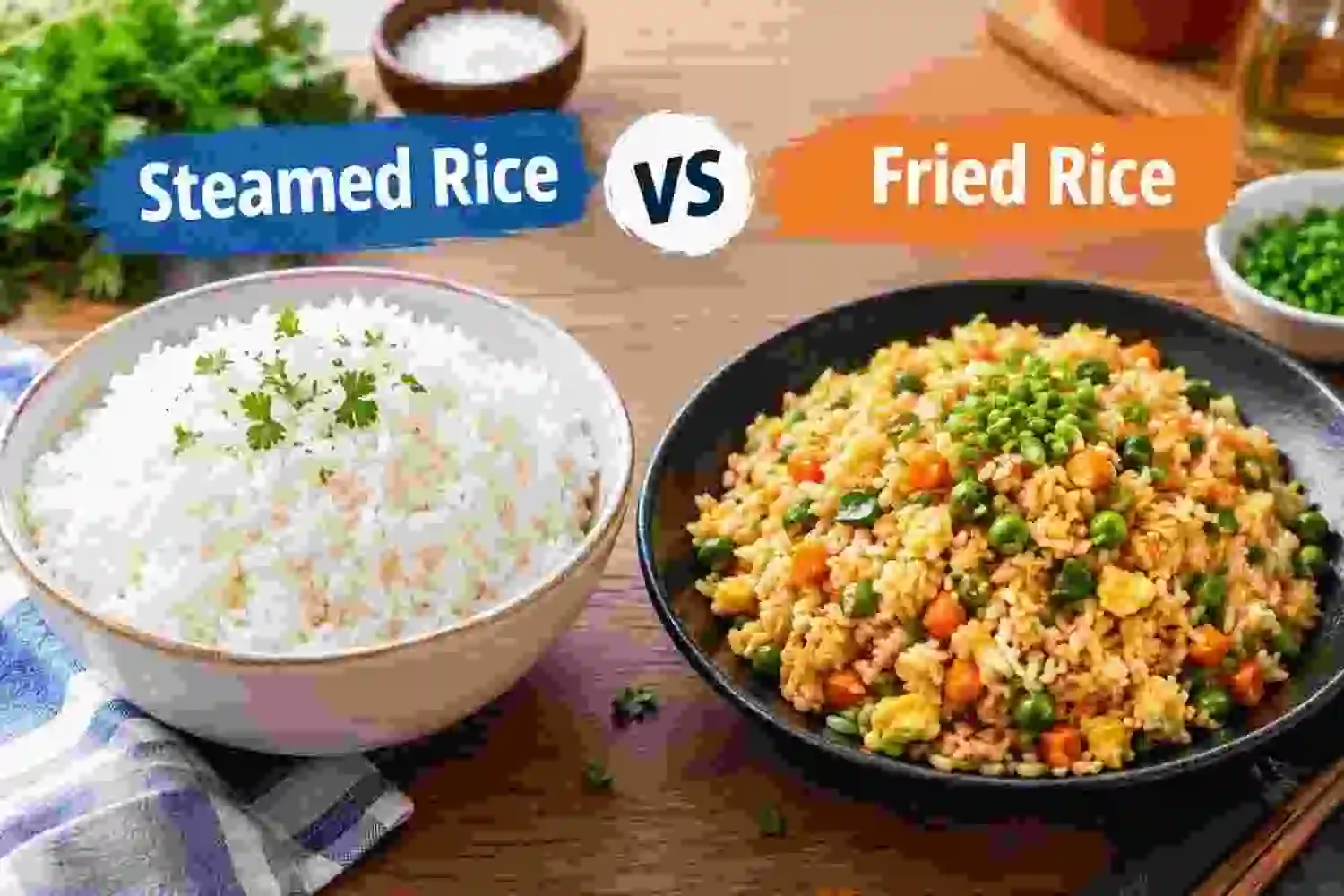
Rice is a staple food in many diets worldwide. You find it steamed or fried in many everyday meals, but how you prepare it can change the calories, fat, sodium, and overall nutritional profile.
So, is steamed rice really better for us than fried rice?
For many meals, steamed rice is the easier choice if you want fewer extra calories and less fat. Fried rice gets a little more complicated because its nutrition depends on how you make it, like how much and what kind of oil you use, the sauces you add, the eggs and meat you toss in, and the veggies you throw in too.
Now, that doesn’t mean fried rice is unhealthy from the start. If you make a homemade fried rice with a small amount of healthy oil, plenty of vegetables, a bit of lean protein and moderate amounts of salt, it can easily fit into a balanced diet.
The biggest difference really comes down to what you add when you cook.
What Is Steamed Rice?
Steamed rice is simply rice cooked in water until it is tender. You can cook it in a rice cooker, saucepan, pressure cooker or steamer – the choice is yours.
Steamed white rice as it comes in a packet is basically fat-free because you don’t need any oil to cook it.
It’s got carbs as its main nutrient and some protein, but not a lot of vitamins and minerals – although exactly how much you get depends on the type of rice you’re eating and whether it’s been enriched.
Brown rice and other whole-grain types have much more fibre than white rice.
The real advantage of plain steamed rice is you can control exactly what goes in the pot. If you cook it with just water and don’t add anything like butter, oil or salty sauces, your rice will be relatively plain and simple.
What Is Fried Rice?
Fried rice is cooked rice stir-fried with oil and other ingredients.
A basic fried rice recipe will probably include:
- Cooked rice
- Cooking oil
- Eggs
- Onion
- Carrots
- Peas
- Green onions
- Soy sauce or some other seasoning
- Chicken, shrimp, pork, tofu or whatever protein you like
Restaurant versions often have loads more oil and salt than a homemade version, though
The nutritional value of fried rice can vary really wildly, though.
A veggie fried rice made with a small amount of oil is a lot different from a restaurant fried rice cooked in a load of oil with salty sauces and fatty meat.
Why Steamed Rice Often Has Fewer Calories
The main reason plain steamed rice is so low in calories is that it doesn’t need added fat to cook.
Fried rice needs oil or some other fat to sauté the rice and other ingredients, and oil is really high in calories – one tablespoon of it has about 120 calories.
So while the rice itself isn’t suddenly going to turn into a high-fat food just because it’s fried, the added oil is basically the main reason fried rice has more calories and fat than plain steamed rice.
Of course, the amount of oil you use matters too.
Using just one teaspoon of oil for a big pan of fried rice will give you a different nutritional result than using several tablespoons, for instance.
Is Steamed Rice Lower in Fat?
Generally speaking, yes – plain steamed rice is very low in fat. But if you’re serving fried rice, you’ll add extra fat from the cooking oil, as well as from ingredients like eggs, meat, butter, or other cooking fats.
The type of fat you use also matters too.
The American Heart Association recommends choosing unsaturated fats over saturated fats and avoiding trans fats altogether. They also suggest using liquid, non-tropical vegetable oils like canola, olive, soybean, sunflower, and peanut oil as a healthier alternative to solid fats and tropical oils.
When you make fried rice at home, controlling how much oil you use can make a big difference.
Does Steamed Rice Have More Carbohydrates?
That’s not necessarily the case. Both steamed rice and fried rice are based on rice, so they have basically the same amount of carbs.
The difference really lies in what you add on top of the rice. Cooking oil adds fat, not carbs, and veggies add a relatively small amount of carbs plus some great fibre and nutrients. Sauces, on the other hand, can add carbs, sugar, or sodium, depending on what you’re using.
How much rice you serve also matters.
You’d actually get more carbs from a big serving of steamed white rice than from a smaller serving of fried rice, because of the differing portion sizes. For a clear picture, it’s best to compare equal portions.
Is Brown Rice Healthier Than White Rice?
Brown rice is a whole grain, and white rice is essentially what’s left after the bran and germ have been stripped away during processing.
Because brown rice retains those extra bits, it generally has more fibre and some extra nutrients. The American Heart Association recommends a heart-healthy diet that includes foods made mostly of whole grains rather than refined grains.
So this opens up another option – rather than just wondering whether rice should be steamed or fried, you could also be asking yourself:
- What type of rice are we eating?
- How much are we eating?
- How much oil is used?
- How much sodium is added?
- Are veggies included?
- Is there a lean source of protein?
These kinds of questions will give a much more complete picture.
Which Has More Protein, Steamed Rice or Fried Rice?
Fried rice usually wins in the protein stakes because it often includes eggs, chicken, shrimp, beef, pork, or tofu.
On the other handother hand, plain steamed rice doesn’t have much protein on its own. But then it doesn’t have to – you can make steamed rice a balanced meal by adding in some of the following:
- Grilled chicken
- Fish
- Eggs
- Tofu
- Beans
- Lentils
- Lean beef
- Plenty of veggies
If you focus only on the rice itself, you’re missing the bigger picture.
How to Make Fried Rice Healthier
There are a few things you can do to a fried rice recipe without losing any texture or flavour.
1. Measure the Oil
Instead of pouring oil straight into the pan, measure it out first.
Using a bit less oil helps cut calories and fat, and a hot pan helps stop the rice from sticking.
2. Pick a Good Cooking Oil
For everyday meals, choose an unsaturated vegetable oil as your go-to.
You’ve got options like:
- Canola oil – a pretty common choice
- Olive oil – a popular one for its taste
- Peanut oil – adds a nice flavour
- Soybean oil – or sunflower oil too
- And then there’s sunflower oil
Some of the above are also on the American Heart Association’s list of healthier options. Just to be clear, they advise against deep-fat frying when trying to eat healthy.
3. Add Some More Veggies
Veggies can do a lot for your fried rice, beyond adding colour. They add texture, vitamins, minerals, and even some fibre.
Use whatever veggies you’ve got lying around the house. If not, you can always pick up some frozen ones at the store.
4. Add a Bit of Protein
Adding eggs, chicken, shrimp, tofu, or other lean protein sources makes your fried rice more satisfying and complete.
Protein also helps you feel fuller.
5. Don’t Overdo the Soy Sauce
We don’t need to drown the rice in soy sauce. Just start with a little, and taste as you go. If you need more, then add it. Reduced-sodium soy sauce is a good option too. The American Heart Association recommends choosing lower-sodium products when possible, so look for those.
6. Swap to Brown Rice
To boost the nutritional value of your fried rice, try replacing some of the white rice with brown rice. Other whole grains can work pretty well too.
7. Watch Your Portion Size
Even with a healthier fried rice recipe, you still need to watch your calories. Serving size matters big time.
So, go for a moderate bowl with some veggies and protein on the side, rather than a big bowl eaten on its own. This way, you’ll still enjoy your meal, but it will be a lot kinder to your waistline.
Steamed Rice vs Fried Rice for Weight Management
To be clear, neither of these foods automatically causes weight gain.
Many other factors affect body weight, like how much energy you take in, how much exercise you get, what foods you choose, and so on.
Steamed rice is easier to control because it has no added oil. But with fried rice, the more oil and high-calorie ingredients you add, the higher the calorie count.
If you’re looking to make fried rice a bit more weight-friendly, here are some tips:
- Use a bit less oil
- Pile on the veggies
- Choose lean protein sources
- Go easy on the high-calorie sauces
- Try to stick to a moderate rice portion
- And just say no to oversized restaurant portions – they’re usually way too big.
Watch portion size with both dishes.
Steamed Rice vs Fried Rice for Heart Health
When it comes to heart health, the whole recipe matters – not just the type of rice you choose.
Steamed rice on its own is pretty low in added fat. But with fried rice, you have added oil to contend with, and the type of oil you use can have a big impact.
Saturated fat is another heart-health consideration. The American Heart Association says to limit saturated fat to less than 6% of total calories – for a 2,000-calorie diet, that’s about 13 grams per day.
If you use butter or lard, you’ll blow past that limit. But using a bit of unsaturated vegetable oil is a different story.