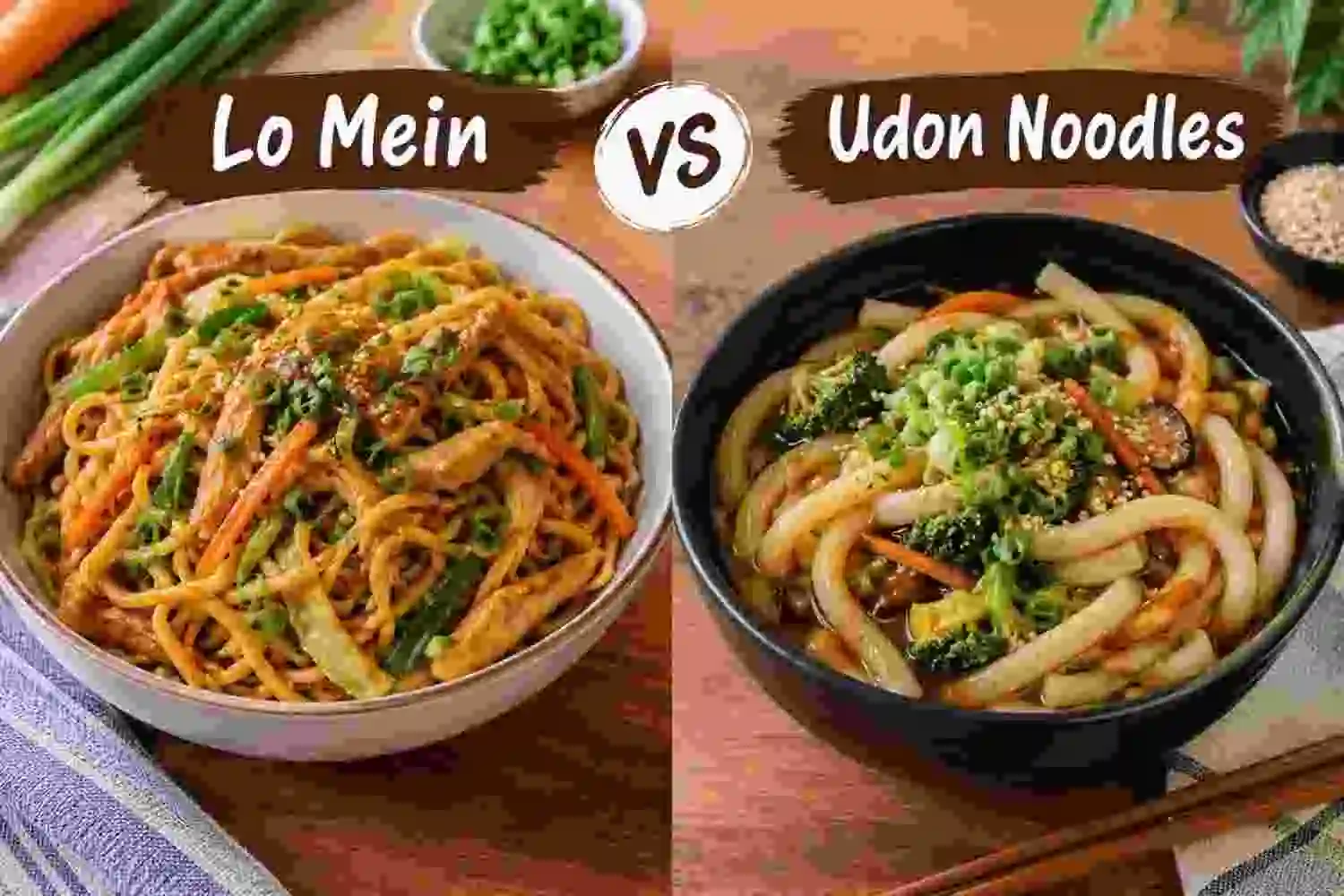
The biggest difference is simple: lo mein noodles are usually thinner, softer, and often made with egg, while udon noodles are much thicker, chewy, and traditionally made with wheat flour, water, and salt.
Lo mein is closely connected with Chinese-style noodle dishes and is often tossed with vegetables, meat, seafood, and a savory sauce. Udon is a Japanese noodle that can be served hot or cold, in broth, with a dipping sauce, or stir-fried.
So, which one should we use? That depends on the kind of noodle dish we want to make.
The easiest way to remember the difference is:
Lo mein = thinner and softer.
Udon = thicker and chewier.
Lo mein is a Chinese noodle dish made with cooked noodles that are tossed with other ingredients, such as vegetables, meat, seafood, and sauce.
The noodles are usually made from wheat and are often egg noodles. Their mild flavor makes them a good match for strong sauces and savory ingredients.
A typical lo mein dish may include:
- Chicken
- Beef
- Shrimp
- Pork
- Cabbage
- Carrots
- Bell peppers
- Mushrooms
- Bean sprouts
- Green onions
- Soy sauce
- Sesame oil
- Oyster sauce
One important point is that lo mein refers to both a noodle style and a dish, depending on the context. In a home kitchen, we often use the term to describe the entire saucy noodle meal.
Lo mein noodles are usually cooked first and then combined with the other ingredients. This gives them a soft texture and lets them coat evenly with sauce.
What Do Lo Mein Noodles Taste Like?
Lo mein noodles have a mild taste, so the sauce usually provides most of the flavor.
If the noodles contain egg, they can taste slightly richer than simple wheat noodles. Their soft and springy texture also makes them easy to eat with vegetables and sliced meat.
That is why lo mein works so well with a savory sauce. The noodles do not overpower the other ingredients.
What Is Udon?
Udon is a traditional Japanese noodle made mainly from wheat flour, water, and salt. It is known for being much thicker and chewier than many other Japanese noodles.
Udon is especially popular in Kagawa Prefecture, where Sanuki udon is an important part of the local food culture. Sanuki udon is known for its firm, springy texture.
Unlike lo mein, udon doesn’t need egg to achieve its traditional texture.
You can serve udon in many ways. We can enjoy it:
- In a hot broth
- With a dipping sauce
- Cold
- With Japanese curry
- Stir-fried
- With vegetables
- With tempura
- With chicken, beef, seafood, or tofu
So, although many people think of udon as a soup noodle, udon isn’t limited to soup. Japanese cuisine includes both hot and cold udon dishes.
What Does Udon Taste Like?
Udon has a mild wheat flavor. It does not have a strong taste of its own, which is one reason it works well with different broths and sauces.
The real attraction is its texture.
Good udon should feel thick, soft, and pleasantly chewy. The noodles have enough body to stay satisfying even in a light broth.
Lo Mein vs Udon: The Biggest Differences
1. The Ingredients Are Different
One of the first differences is what the noodles are made from.
Traditional udon has a very simple base of:
- Wheat flour
- Water
- Salt
The Japan National Tourism Organization describes udon as thick wheat noodles made from wheat flour, water, and salt.
Lo mein noodles are commonly wheat-based egg noodles, although exact ingredients can vary by brand and product.
This difference matters if we have an allergy or follow a particular diet. We should always check the package because commercially produced noodles can have additional ingredients.
2. Udon Is Much Thicker
The easiest visual difference is noodle size.
Udon is thick. Lo mein is much thinner.
Side by side, udon usually looks much more substantial. Its thickness is a main reason for its chewy texture.
Lo mein noodles are thinner, giving them a softer, lighter bite.
If we want a large, satisfying noodle that stands out in the bowl, udon is a natural choice.
If we want noodles that blend easily with vegetables and sauce, lo mein works very well.
3. The Texture Is Different
Texture may be the biggest difference after thickness.
Lo Mein Texture
Lo mein noodles are generally:
Udon Texture
Udon is generally:
Traditional Sanuki udon preparation involves thorough kneading, which creates its characteristic firm, springy texture.
That is why replacing one noodle with the other changes the dish, even if we keep the sauce the same.
4. The Traditional Dishes Are Different
Lo mein is strongly associated with Chinese-style saucy noodle dishes.
Udon is strongly associated with Japanese noodle dishes, including noodle soups, cold noodles, dipping noodles, and stir-fried preparations.
Udon can be served in a simple dashi-based broth, while other versions use ingredients such as soy sauce, curry, vegetables, or tempura.
This gives us a useful rule:
Think lo mein when we want a saucy Chinese-style noodle dish. Think udon when we want a thick Japanese noodle.
Lo Mein vs Udon for Stir-Fry
You can use both noodles in a stir-fry, but they produce very different results.
Lo Mein Stir-Fry
Lo mein is a natural choice for a saucy stir-fry.
The thinner noodles mix easily with:
- Chicken
- Beef
- Shrimp
- Cabbage
- Carrots
- Mushrooms
- Bell peppers
- Soy-based sauces
The finished dish is usually soft, savory, and well coated with sauce.
Udon Stir-Fry
Udon can also be stir-fried. One popular Japanese preparation is Yaki Udon.
Because udon noodles are thick, the finished dish has a heavier, chewier bite than lo mein.
Udon works especially well with vegetables, mushrooms, meat, seafood, and savory Japanese-style sauces.
Which Is Better for Stir-Frying?
No need to treat this as a competition.
If we want a classic Chinese-style saucy noodle dish, lo mein is the better match.
If we want thick, chewy noodles in a Japanese-style stir-fry, udon is a better fit.
Lo Mein vs Udon for Soup
Udon has a strong connection with noodle soup.
In Japan, udon can be served in a light broth, and different regions have their own styles and toppings. Some versions are served hot, while others are served cold or with a dipping sauce.
The thick noodles hold up well in broth and give every bite a chewy texture.
Lo mein is usually more closely associated with tossed or sauced noodle dishes rather than traditional Japanese-style noodle soup.
So if we are making a comforting bowl of thick noodles and broth, udon is the natural choice.
Can We Substitute Udon for Lo Mein?
Yes, especially in a stir-fry.
If we have udon in the refrigerator but no lo mein noodles, we can still make a delicious noodle dish.
The important thing is to expect a different result.
Udon will make the dish:
- Thicker
- Chewier
- More filling
- More noodle-focused
The sauce may also need a small adjustment because thick udon noodles have more surface and body than thin lo mein noodles.
A simple substitution works best when the recipe is a flexible stir-fry rather than a dish where exact noodle texture matters.
Can We Substitute Lo Mein for Udon?
We can use lo mein in some recipes, especially stir-fries, but the difference will be noticeable.
The noodles will be thinner and softer.
For example, if a recipe is designed around thick udon, replacing it with lo mein will remove much of the chewy texture that makes udon special.
For soup, the difference can be even more obvious.
If the recipe specifically calls for udon because of its thick texture, using udon will give us the intended result.
Lo Mein vs Udon With Chicken
Chicken works well with both noodles.
For lo mein, you can cook sliced chicken with vegetables and toss it with a savory sauce.
For udon, add chicken to soup, curry udon, or a stir-fried noodle dish.
The choice mainly depends on the texture we want.
- Lo mein with chicken: softer, lighter noodles with sauce.
- Udon with chicken: thick, chewy noodles with a more substantial bite.
Lo Mein vs Udon With Shrimp
Shrimp is another ingredient that works with both noodles.
A shrimp lo mein can combine shrimp, vegetables, and a savory sauce for a quick stir-fry.
You can pair shrimp with udon in soup or a stir-fried dish.
Because udon is so thick, the noodles become a bigger part of each bite. Lo mein lets the shrimp and vegetables mix more evenly with the noodles.
Are Lo Mein and Udon Gluten-Free?
No. Traditional lo mein and traditional udon are both wheat-based noodles.
Because wheat contains gluten, people following a gluten-free diet should not assume that either noodle is safe.
Gluten-free noodle alternatives are available, but they are not the same as traditional wheat-based lo mein or udon.
Always check the ingredient label on packaged noodles.
Are Lo Mein and Udon Vegan?
It depends on the product and the complete dish.
Traditional udon is made from wheat flour, water, and salt, so the noodles themselves don’t require egg. However, the broth or sauce may contain fish or other animal-derived ingredients.
Lo mein needs more attention because many lo mein noodles contain egg.
The complete dish can also contain ingredients such as:
- Oyster sauce
- Fish sauce
- Chicken stock
- Meat
- Seafood
- Egg
So we should check both the noodles and the sauce before calling a dish vegan.
Fresh, Frozen, or Dried: Which Noodles Should We Buy?
The type of noodle can affect the cooking process and final texture.
Fresh Lo Mein Noodles
Fresh lo mein noodles are convenient for quick noodle dishes. They usually cook faster than dried noodles.
Dried Lo Mein Noodles
Dried noodles are easy to store and useful for keeping in the pantry.
Fresh Udon
Fresh udon has a soft and chewy texture and is excellent for soups and stir-fries.
Frozen Udon
Frozen udon is also convenient and is widely used for quick meals. It’s especially useful when you want thick noodles without making them from scratch.
Dried Udon
Dried udon is another option, although its texture may differ from fresh or frozen udon.
For any packaged noodle, follow the package instructions because cooking times can change.